


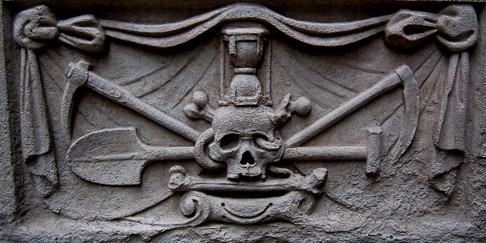
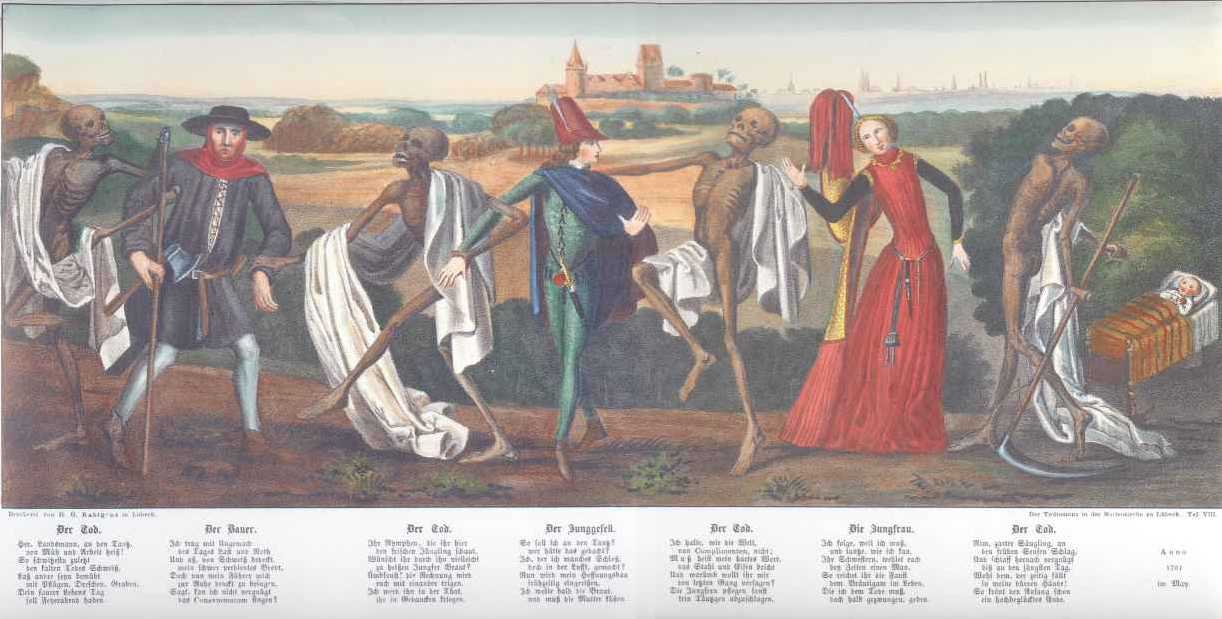
Above are some images of the memento mori, a visual trope in Western European art alluded to in the title of Jonathan Nolan's short story (and still present in the title of his brother's film). You can see both early renditions as well as a contemporary version as self portrait by Sarah Lucas.
The Latin term, memento mori, translated literally as "remembrance of mortality," or more colloquially as "remember you will die," linked with an ensemble of shorthand images for death, has been a leitmotif in Western European religious art and tombstone design since medieval times. Examples of this tradition can still be seen in many graveyards, where older tombstones combine images of hourglasses, skulls, and bones. Thus, passersby are asked to remember not only the deceased but their own mortality as well.
The emblem of the memento mori entered Western European religious art sometime after 1300. Not only did it make use of the pairing of the skull with some image of life (a flower, etc.) but was expanded into narrative forms as well. The common motif of "the Dance of Death" often featured skeletal figures leading people of every social class in a conga line of mortality. Other narrative paintings depicted a typical everyday routine interrupted by some striking reminder of the Big Narrative Closure---Death.
Coupled with religious sermons, the images have a clear meaning: life is short, you can't take it with you, so make sure you are living a good (Christian) life so you avoid hell and enjoy heaven. However, when memento mori images appear apart from explanatory sermons and verses, their signification can become ambiguous. Being reminded of one's mortality can lead in directions that not all religious authorities would approve of: memento mori can easily become carpe diem. Because life is short, we should enjoy its pleasures while they last.






i am afraid of death and everything having to do with it, but the funny thing is im not afraid of the after life. I think this movie should be interesting. im excited to see the images.
ReplyDelete"memento mori," though using often grisly motifs, is not just about scaring or horrifying, but about redirecting the viewer's attention to life (or the after life)...
ReplyDeletei can't seem to find the link to Memento Mori?
ReplyDelete